Years back, I began to hear of a concept of food forests in which people would mimic natural ecosystems and processes in agriculture through layering edible trees, shrubs, and groundcovers to efficiently use resources and space. It sounds super cool and sustainable. Tall pecans and hickories for your canopy, Apples, peaches, and pears next. Blueberries and raspberries, asparagus that will produce for decades; carrots and garlic, strawberries for groundcover, and vining plants like cucumbers, squash, and green beans.
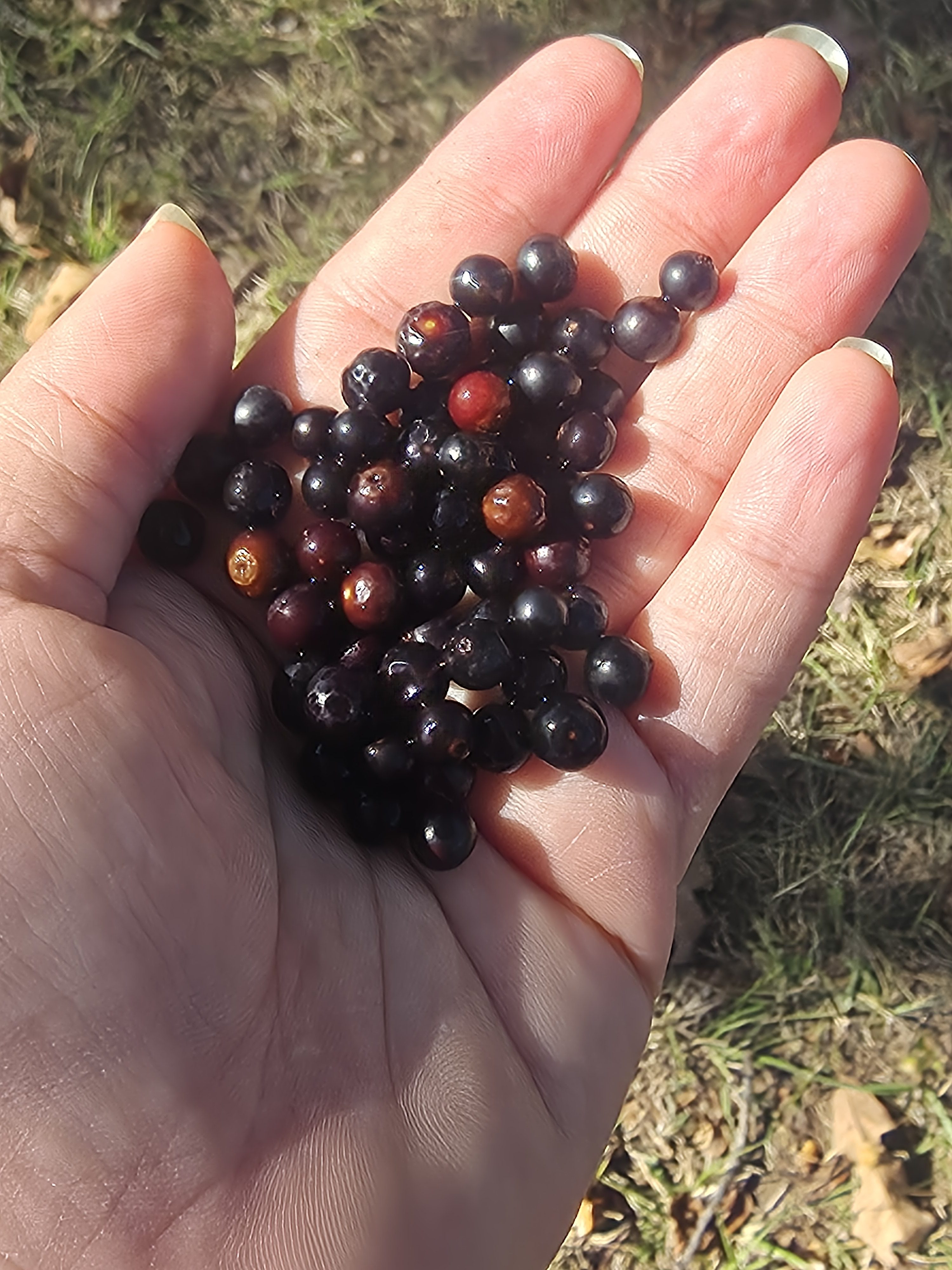
But as I collect seed stock for the nursery this fall season, it strikes me how many of these seeds are from plants that are edible, nutritious, and tasty, and how alien these plants as human food seem to most. It’s hard to grow produce in Texas. Our climate is super hot, super cold, pouring rain, or bone dry. Full Texas sun will happily fry a nursery plant with a full sun tag. I’ve talked to many a Texas transplant that has been very discouraged by our growing climates.
Native Texas plants are unphased by Texas’ weather swings. Perhaps the concept of food forest would make more sense if we incorporated not only regionally relevant vegetable crops, but also include native plants that already produce food that supports humans, that developed in the climate in which we live.

If we just gave ourselves the time to get to know the plants around us, I think our idea of a food forest might look very different. It’s true that some of us live in HOAs and zero lot-line properties…HOAs historically don’t like front-yard vegetable gardens, or front-yard micro-prairies, but how many of them know that a hawthorn tree is landscaping AND food? How many of them know that American Beautyberry is food, insect repellent, AND beautiful fall color for border gardens? Pair that with witch hazel, now you have a riotous fall garden of complementary colors (yellow witch hazel flowers, and purple beautyberry fruits!), medicine, and food, cosplaying as tasteful landscaping!
These native plants don’t need our attention and our constant care to support us and give to us. They just need space to thrive. As more and more people move into smaller and smaller spaces, the way we dedicate space to native habitat (that we are all a part of by the way) may become more creative, but it’s always worth while to incorporate that habitat across our individual pockets of space to augment the overall area available to the plants and animals that were here before us.
Yes, include the peach tree! Texas makes great peaches! But, maybe skip the cultivated cherry in favor of our native black cherry (Prunus serotina) in the east, or choke cherry (Prunus virginiana) in the far west. Include the pecan and the walnut, and the hickory, use the cultivated versions! They were cultivated from our natives, so they should do great here. Or, better yet, take advantage of the probably hundreds and hundreds of oaks that already live in your neighborhood.
Add asparagus and garlic and peppers to your garden, but also make space for rusty blackhaw and chili piquin and dewberry. Cultivated vegetable crops are only half the story. Include the natives. The ones the bees and butterflies recognize. Those pollinators will gravitate towards the natives yes, but will also pollinate your cultivated crops because they’re near-by. I add strips of wildflowers to my vegetable garden, and it does wonders for the productivity of my fruit and vegetable plants.
Holistically, we need to acknowledge that we are a part of the rhythm of nature, and we need to do our part to introduce ourselves, and participate.



Leave a Reply