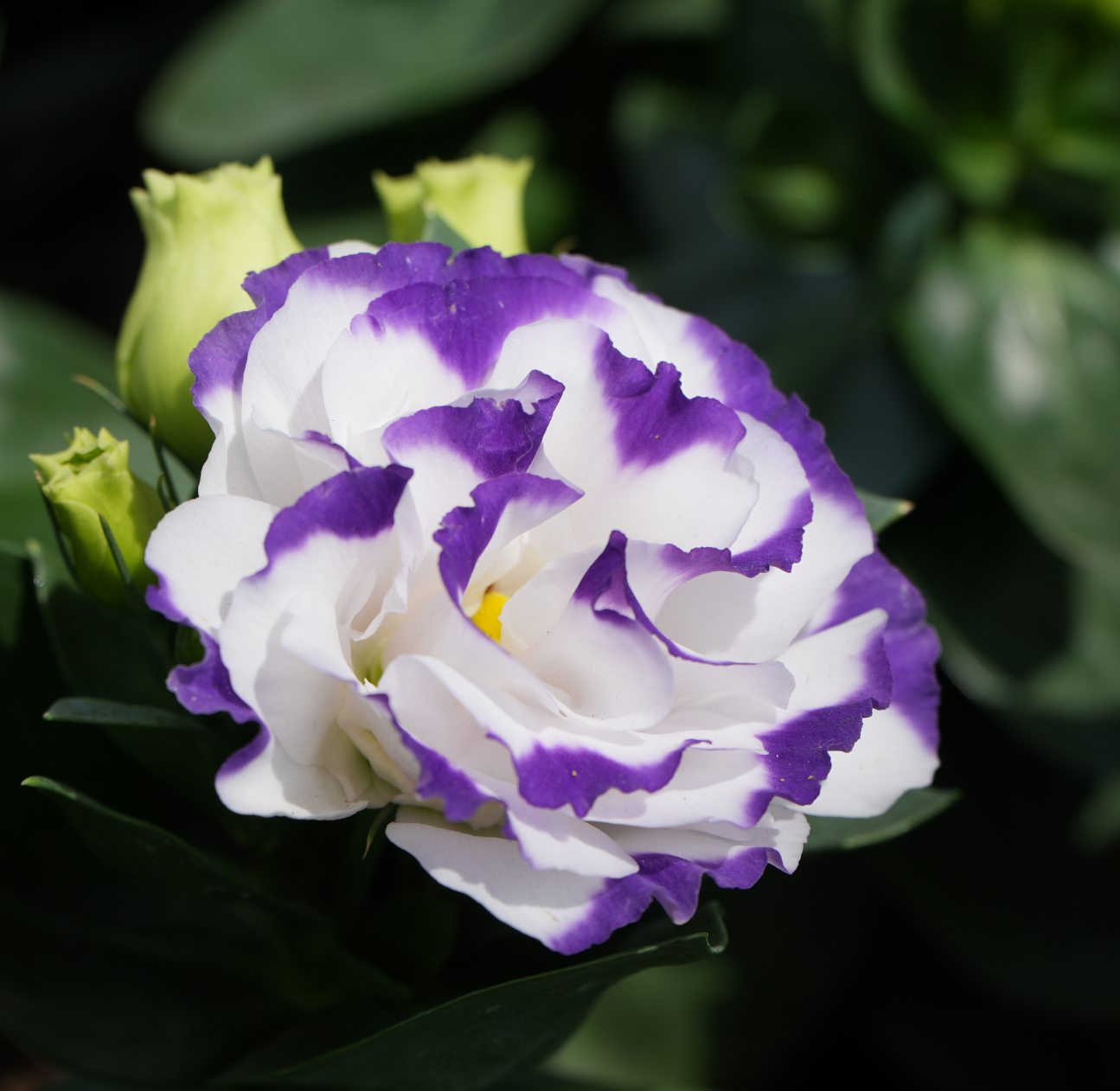
Texas Bluebells were once known under the botanical name Lisianthus, a name still used to refer to the cultivated version from Japan. These beautiful flowers have an impressively long vase life, making them popular as cut flowers. Plot twist: those Lisianthus, selectively bred in Japan for more than 70 years, originated here in the US. Even now, the cultivar (a version of a plant that has been selectively bred and cultivated by humans, and typically given an appealing, marketable name) known as the queen of flowers, is largely unknown.

Today, Texas Bluebells go by the botanical name Eustoma. Originating from Greek, Eustoma translates to “good mouth”. Once, the botanical name was Eustoma grandiflorum (a specific epithet referring to the large size of a plant’s flower). It is now Eustoma exaltatum, with two recognized variations.

These lovely native wildflowers are now struggling to maintain their native range. The big, conspicuous blooms mean they are often noticed while in flower, and picked for wildflower arrangements, preventing them from going to seed. The tiny seeds, of size that reminds me of the “caviar” in vanilla beans, produce equally tiny seedlings. This small size means they dry out very easily, and once dried out, they don’t bounce back very well. When learning to work with these guys, I quickly learned that if I allowed the substrate to dry out even once, the fragile seedlings would fade and die over the next few days, leaving no survivors. In wild settings, I often find established adults in shallow depressions or seasonally moist meadows.

Bluebells are not palatable to cattle, and anecdotally, are said to do better in pastures with cows than in fallow locations. This may be due to the cattle’s ability to keep competitive grasses and forbs in check, allowing the very tiny Bluebell seedlings to get established. When not in flower, this blue-green plant with a waxy cuticle, and almost succulent appearance goes widely un-noticed. That all changes towards the beginning of May in the DFW area, when the Bluebells begin to put on a spectacular show. In the heat of summer, through June and July, and even August when so many other native wildflowers are throwing in the towel, Texas Bluebells are exploding in riotous shades of lavender, violet, and royal blue. The show continues, tapering off through September. The long-lasting blooms are a joy to behold.
As each flower is pollinated and spent, Eustoma puts out more and more long lasting blooms. It seems to have all the qualities a flower destined for cultivation or native gardens, yet we see few of them. Eustoma has a reputation of being difficult to cultivate, but I have been working with this flower for several years now, and I would love to share these gorgeous flowers with you.


Leave a Reply