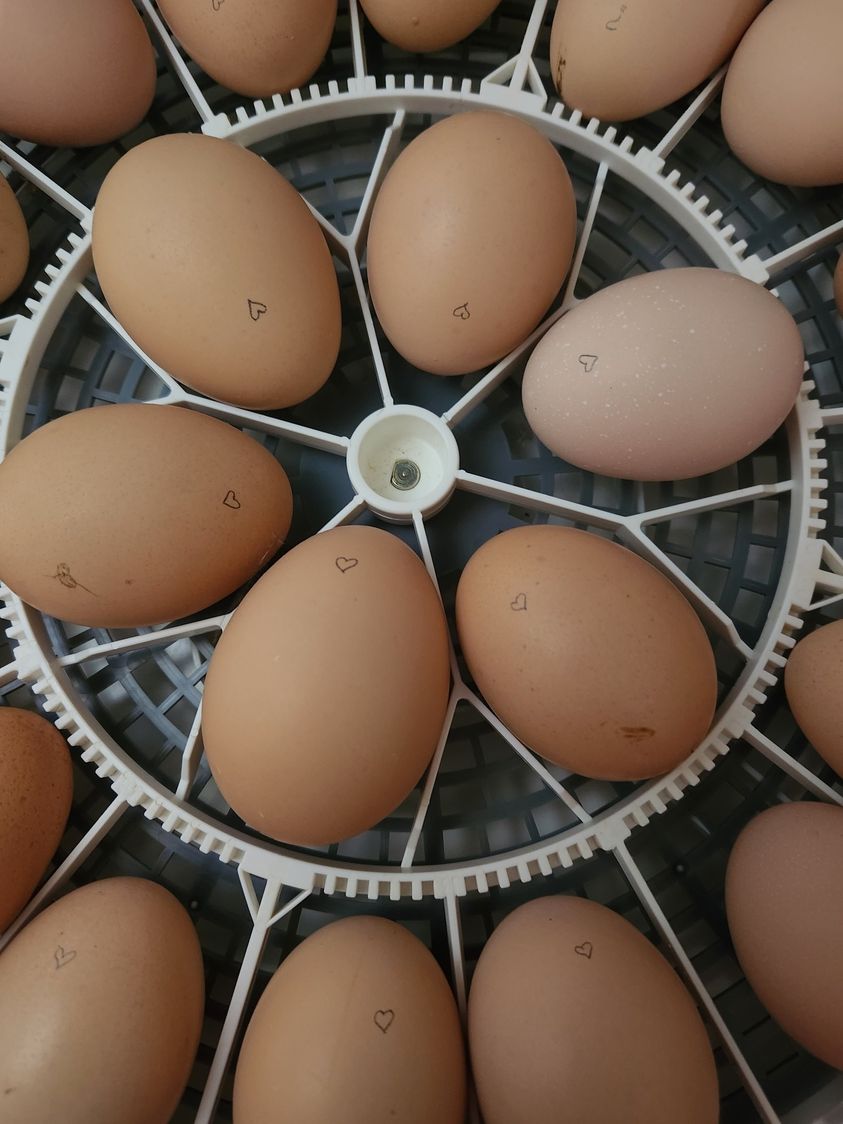

It seems like there’s this notion that if you aren’t 100% living off the land, your animals, and your surroundings, then you aren’t a real homesteader. That’s just not realistic for the vast majority of people looking to integrate some homesteading processes into their daily lives. Most people can’t just walk away from their jobs and onto a piece of land that will provide for their every need.
I think the other part of that people forget is that humans are a social species. We are “designed” to rely on our families and communities. Our tribes watch the babies so our mothers can rest, our fathers keep watch to keep our communities safe, aunts, uncles, brothers, cousins, sisters, all work to create food security for everyone. What I am getting at is that no one person was meant to do it all alone. It’s okay to get most of your food from the commercial grocer.
We exist in a society isolated from one another by technology and habit. That’s not sustainable from the perspective of self-reliance (really, it should be defined as tribal reliance, or community reliance…we rely on our immediate communities for support). That doesn’t mean we can’t work towards being less dependent on commercial supply chains, and that may look different for each of us.
For me, that first step away from commercial supply chains was chickens. Years and years ago, when I still lived in my parent’s house; Where I remembered growing up with a single buff Orpington hen from an elementary school hatching project, I started with hatchery birds and a 10×10 chain link dog kennel. I picked it up in a borrowed truck for $100. A lot of money for me then. I couldn’t afford a “proper” coop.
I am glad social media wasn’t so prevalent then, as I can just imagine all of the comments trying to shame me into feeling inadequate, irresponsible, underprepared. But, you have to start somewhere. That means research and choosing fundamentally practical, functional, and safe options over aesthetic fluff. I added corrugated sheets to act as a roof over one half of the kennel, and down the back wall. The rest of the kennel got hardware cloth to keep prying predators out. In winter, it was stacks of hay bales and a single blue tarp for insulation. It wasn’t beautiful, it would never grace a Pinterest board or an Instagram reel, but it functioned. And I got eggs. And happy chickens.
Eventually, I learned I had a love for Blue/Black/Splash Orpingtons. Specifically, the English variety. When I was finally able to get my hands on some, I was frustrated with breed traits (like going broody and raising chicks, large size, stately appearance) that had been apparently lost in hatchery birds. I did not have the space or money for the materials that went along with incubating, hatching, and raising chicks at that time, and I felt that if I was keeping chickens to be less reliant on commercial infrastructure, I needed to be able to keep them sustainably.
I think this is when my Homesteading journey kicked off. It hasn’t been fast, but it has been steady, and today, I can see myself so much further down the road than I ever thought imaginable then. My flock is mostly based on Blue Orpingtons now (I found quality lines, and added things like game and Swedish flower to my flock for mothering, foraging, and temperament). I can now induce them to go broody, and the flock as a whole is so docile, chicks are safe with any flock member any time. My flock has been with me from my parent’s home, to university, and then to three acres in Colleyville, TX. We’ve moved to a larger place now, and of course my homestead gateways came with me.
We’ve also added Silver Appleyard Ducks to the mix. Most of my native wildflower seed stock now comes from my own land, where I used to travel to various properties to source native genetics. I still do that to some degree. What I am getting at, is that this path has not been linear, and with growth in homesteading, there has been growth in many other areas of my business, my home, and my goals. This journey has been about 25 years so far. I still get the majority of my pantry and fridge items from the grocer, and that’s okay.
Today, I typically have no idea what commercial egg prices look like, and we source our beef from our local community. It may not seem like a lot, but this means the majority of our proteins don’t come through commercial channels, and that’s something. Our increased acreage means I can now work towards supplying at least some of our produce from our own land, and that feels amazing. I will probably never be able to provide the majority of my produce and meats or income from my homestead, I didn’t have the capital to make the road here any shorter, but that doesn’t make it any less significant. Do the research, then get the chickens. Plant the onions, let the lessons come. You’re doing great.
Make a one-time donation
Make a monthly donation
Make a yearly donation
Choose an amount
Or enter a custom amount
Your contribution is appreciated.
Your contribution is appreciated.
Your contribution is appreciated.

Leave a Reply