I posted a short video of me collecting sparkleberries (Vaccinium arboreum) on our ranch the other day, and one of the viewers commented that those little berries looked like mulberries. I was perplexed because in my area, mulberry refers to members of the Morus genus, and the berries look more similar to blackberries or raspberries, and are not berries at all, but an aggregate fruit (as are blackberries and raspberries). Basically, mulberry flowers have multiple ovaries inside, and each creates it’s own tiny fruit during the pollination process, and all of those little fruits kinda squish together to create one bigger, heavily textured fruit.
For clarity, I will refer to Vaccinium arboreum as sparkleberry, and Morus as mulberry for the rest of this entry.

Mulberries

Sparkleberries
Side note, did you ever try to pull apart the individual fruits of a raspberry as a kid? No? Just me?
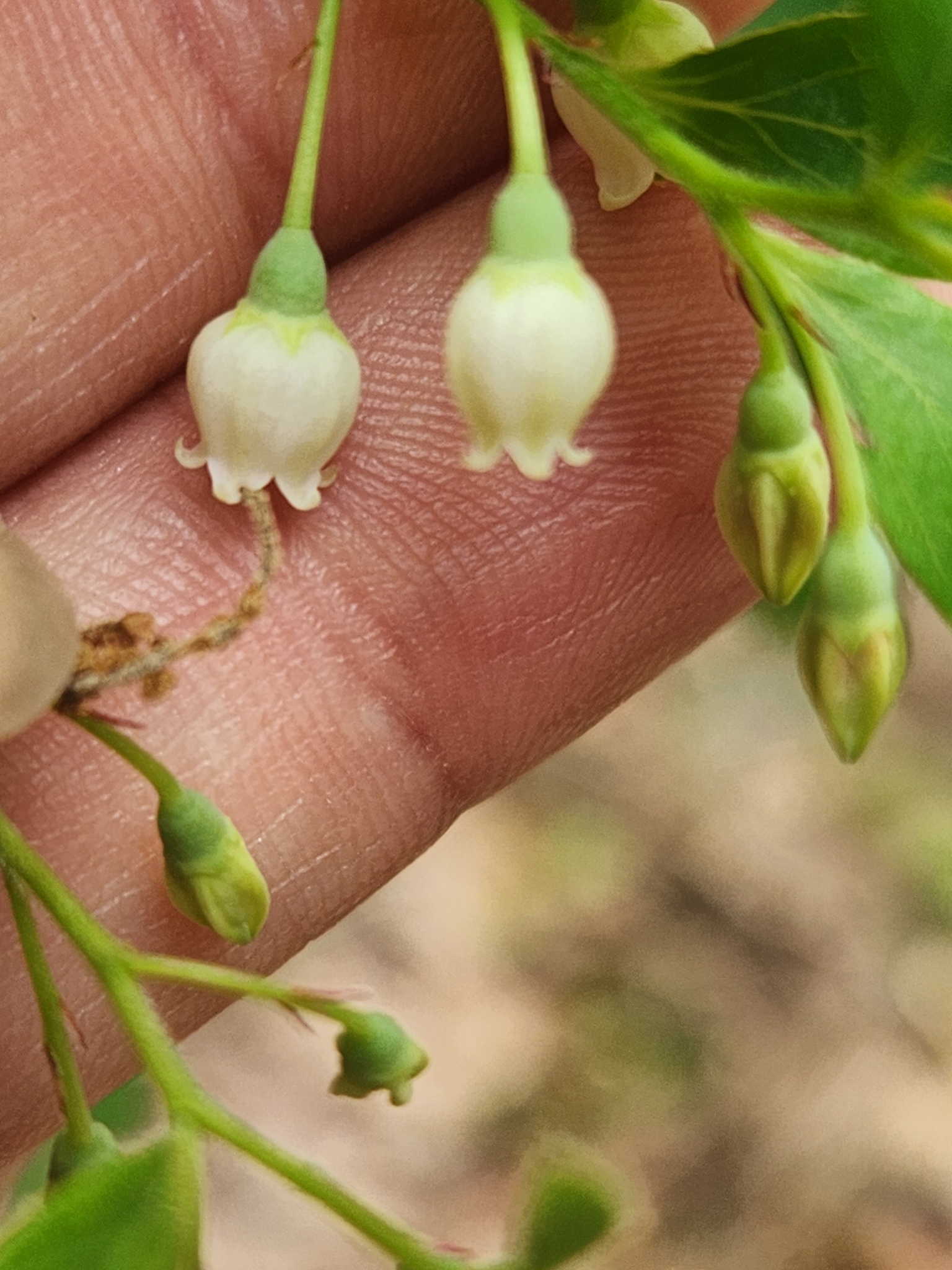
Sparkleberries on the other hand, are true berries. In simple terms, this means each fruit is the product of one ovary within the flower, seeds contained within distinct layers of fruit flesh (sparkleberry flowers are adorable by the way).

If you look at those little sparkleberries, you’ll see that little star shape on the posterior end, and the bell-shaped flowers, both traits very much like their blueberry relatives.
These two fruits, mulberries and sparkleberries, look nothing alike. This is why I loved this comment on that video clip so very much. Botanical names, though they change from time to time, give us a lot of clarity on what we are discussing. This goes for other genera of species as well. Scientific names are internationally recognized. Someone from Italy can discuss a particular species with someone in the US and both parties will know what organism is being referenced if we utilize their scientific name.
If the two of us, the commenter on my video and myself, had been in conversation on the topic of mulberries, we would both have very different ideas of what fruit exactly we were talking about! Mulberries fresh are very juicy and sweet. Sparkleberries tend towards mealy and bland. These two also vary greatly in size. Especially since mulberry has been cultivated by humans for so long.

Maybe you’ve seen this map floating around, but here is an example of the amazing diversity of common names. It’s not even that one organism can have a multitude of (sometimes comical) common names, but that one common name can refer to more than one organism.

Have you heard of pink ladies? I am referring to Oenothera speciosa they’re a very showy, beautiful soft pink primrose common in our area. I have to clarify which botanical name I am talking about because pink lady also refers to Amaryllis belladonna, a far different flower. Oenothera speciosa has a gazillion common names. This includes evening primrose by some people (which also refers to Oenothera biennis), pinks, and many others. My dad calls them buttercups. I have distinct memories of him picking these buttercups for me as a child, and putting them up to my face to coat the tip of my nose in their buttery yellow pollen. Of course, I would mimic him and do the same. It’s a lovely memory.
Buttercups also refers to flowers in the Allamanda genus, and the Ranunculus genus. So, three different unrelated flowers all share a common name! What are some of your favorite common names that cover many different organisms?
Make a one-time donation
Make a monthly donation
Make a yearly donation
Choose an amount
Or enter a custom amount
Your contribution is appreciated.
Your contribution is appreciated.
Your contribution is appreciated.


Leave a Reply